
How Do Cornering Rider Safety Enhancements Work on the 2026 Harley-Davidson® Road Glide® for Columbia Cross Roads, PA Rides?
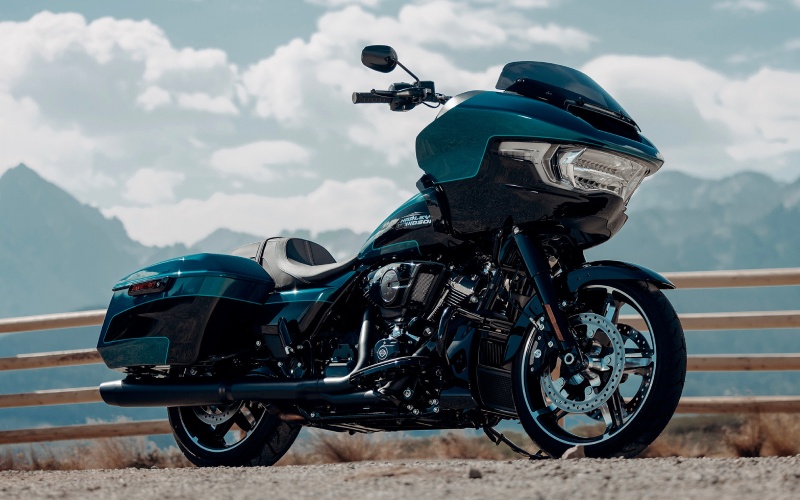
Eisenhauer’s Tioga County Harley-Davidson® - How Do Cornering Rider Safety Enhancements Work on the 2026 Harley-Davidson® Road Glide® for Columbia Cross Roads, PA Rides?
Riders who tackle changing pavement, rolling grades, and surprise weather around Columbia Cross Roads, PA want a touring motorcycle that feels composed when cornering and braking. The 2026 Road Glide® integrates Cornering Rider Safety Enhancements to help maintain stability and your intended line when lean angle, surface grip, and speed interact in real time. These systems work quietly in the background, adjusting brake force distribution and managing rear-wheel slip to reduce surprises on imperfect roads—especially when you are committed to a corner and the surface changes.
Harley-Davidson® pairs Cornering Enhanced Anti-lock Brake System (C-ABS) with Cornering Enhanced Electronic Linked Braking (C-ELB). Together, they optimize brake pressure between the front and rear as lean increases, helping the chassis stay settled and the tire patches stay hooked up. Cornering Enhanced Traction Control System (C-TCS) helps prevent excessive spin when you add throttle while the bike is leaned over, and Cornering Drag-Torque Slip Control System (C-DSCS) mitigates rear-wheel hop or slip during abrupt downshifts or quick roll-offs—useful if you crest a hill and need to scrub speed mid-arc. The aim is not to mask poor inputs but to preserve your chosen path with poise when the road throws a curveball.
- Corner-aware braking logic: C-ABS and C-ELB account for lean, helping stabilize the chassis when you n eed to brake in a turn.
- Traction tuned for lean: C-TCS refines power delivery so grip is used efficiently through mid-corner to exit.
- Downshift composure: C-DSCS reduces rear-wheel lock from engine braking, especially on slick or crowned pavement.
These assistive technologies complement rider skill. Smooth throttle roll-on, progressive braking, and clear sightlines remain essential, but the Road Glide® systems add a margin of control when traction and lean angle stretch the envelope. Riders who split time between rural connectors and longer highway segments will appreciate how unobtrusively these features work—there when needed, invisible when not.
Frequently Asked Questions:
Do I need to activate Cornering Rider Safety Enhancements, or do they work automatically on the 2026 Road Glide®?
These features are always standing by and respond automatically. Their thresholds can vary slightly with your selected ride mode, but there is nothing to toggle as you turn into a corner. If you brake or accelerate while leaned, the systems evaluate lean or lateral acceleration and adjust brake force and torque delivery to help the motorcycle track your intended line.
When you are ready to explore how these systems fit your routes, Eisenhauer’s Tioga County Harley-Davidson® can walk you through real-world scenarios, including how ride modes influence intervention. Our Mansfield team is serving Towanda, Columbia Cross Roads, and Monroeton with practical guidance on setup, tires, and seasonal considerations, so you can build confident habits that match the Road Glide® platform’s capabilities. From wet mornings to sun-baked afternoons, your ride benefits most when technology and technique work together—calm inputs from you, subtle support from the bike, and an open road ahead.